
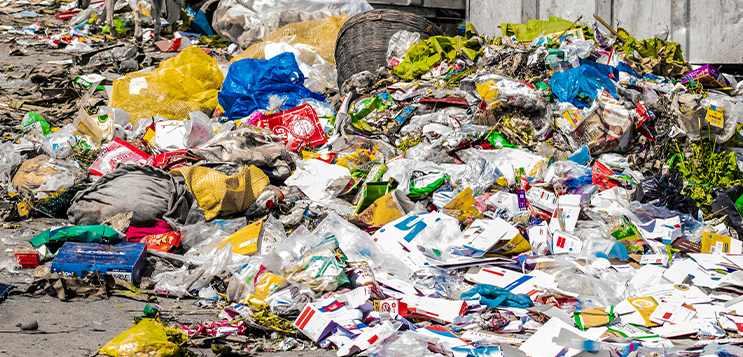
First fully formed in 1907, synthetic plastic slowly but surely entered all our spaces. Over the century, it not only evolved into a material present in every aspect of our lives, but its harmful effects on the environment also came to the forefront. Choking our rivers, soil, and oceans, harming animals, and pervading human bodies as microplastics enter the food chain, this non-biodegradable material, now synonymous with durability, has become an essential building block in almost all industries. Not even agriculture has evaded its intrusion.
Why recycling plastic isn’t a long-term solution
Once it became clear that plastic would take ages to biodegrade, killing microorganisms, birds, fish, turtles, and sharks in the meantime, humans looked to recycling as a potential fix. Recycling it, we thought, would make plastic a little less daunting for the environment.
But here’s the problem: plastics, unlike cotton, wood, or plant-based materials, can only be recycled a limited number of times — often just once — before they lose their structural integrity and cannot be turned into anything useful again. At that point, they exit the pretend circular economy and become the environmental hazard they always were.
Mechanical vs chemical recycling: how plastic is processed today
Plastic recycling happens in two major ways: mechanical and chemical. Mechanical recycling involves physically processing plastic waste into usable material by sorting, washing, grinding, and melting it into new products. Chemical recycling, on the other hand, breaks plastic down into its molecular building blocks.
Each method has its upsides and flaws. Mechanical recycling simply can’t handle the diversity or scale of plastic waste in our society. Chemical recycling, on the other hand, demands enormous resources and generates additional pollution. On top of that, some recycled plastics can be even more toxic than virgin ones, since harmful chemicals aren’t always fully removed during processing. And ultimately, all plastics — recycled or not — end up in landfills, polluting the environment.
This raises a fundamental question: Why are we still promoting plastic recycling instead of moving to stop its production, especially when global plastic output continues to rise every year?
How many times can plastics be recycled?
To make this even clearer, let’s look at how different plastics behave in recycling systems.
| Plastic Type | Common Original Products | Recycled Into (Examples) | Recyclability (Times) | Lifespan (Years in Landfill) |
| Polyethylene Terephthalate (PET/PETE) | Water bottles, soda bottles, juice bottles, fruit/vegetable clamshells, peanut butter jars | New bottles, polyester fiber for clothing (t-shirts, sports uniforms, fleece jackets), carpets, sleeping bag insulation, strapping, thermoformed packaging, automotive parts | 7-20+ times | 450-1000 years |
| High-Density Polyethylene (HDPE) | Milk jugs, detergent bottles, shampoo bottles, cleaning product bottles | Plastic lumber (decking, fencing, picnic tables, park benches), pipes, playground equipment, toys, recycling bins, trash cans, rope, pens, new bottles | Up to 10 times | 100-1000+ years |
| Low-Density Polyethylene (LDPE) | Plastic bags, food bags, squeeze bottles, cling film | Piping, sheeting, films, trash bags, composite lumber, building and agricultural applications, shipping envelopes, furniture | 1-3 times | 20-1000+ years (indefinitely in landfill) |
| Polypropylene (PP) | Margarine tubs, ready-meal trays, yogurt containers, bottle caps | Carpets, fabric, plastic lumber, toys, furniture, automotive parts, storage containers, paint cans, packing peanuts, bottle caps, cups, containers, home insulation, piping, rope/twine, reusable plastic packaging | 3-4 times | 20-300+ years |
| Miscellaneous Plastics (OTHER) | Some toys, doormats (from old flip-flops), polycarbonate, polylactide, acrylic, nylon | Various craft items, some specialized products (if specific recycling facilities exist) | Limited/Rarely (varies by specific type) | 20-500+ years (often indefinitely) |
| Polyvinyl Chloride (PVC) | Piping, window frames, garden hoses, some packaging, children’s toys | New pipes, carpet backing, fencing, other PVC products | 6-7 times (uPVC up to 15 times) | 100-1000+ years |
| Polystyrene (PS) | Foam cups, disposable cutlery, packing peanuts, dessert trays | Plastic lumber, molding trim | 1-3 times | 500-1000+ years (indefinitely in landfill) |
The recycling symbol myth: why most plastics still end up in landfills
Beyond technical challenges, a deeper systemic issue is public perception driven by misleading symbols and messaging. Owing to the false narrative of plastic recycling as a cure-all, the world continues to extract fossil fuels and churn out new plastic, thinking all will be recycled ultimately. Moreover, people often mistake recycling symbols on products as a guarantee that those items are recyclable. This leads to contamination in recycling streams, which drastically lowers the quality and usability of collected plastic.
For example, even a small amount of PVC mixed with PET can ruin an entire batch. Food residue, too, can create foul-smelling recycled plastic, rendering it unsuitable for most uses. These contaminated items are usually diverted to landfills, completely undermining the point of recycling.
Why we must move beyond plastic recycling
We can’t deny the durability, affordability, and versatility of plastic. But no matter how convenient it is, we are poisoning this planet, and ourselves, in the name of ease. So, what’s the plan? Have we collectively decided to slowly poison the earth and make it a problem for the future? Because if we don’t act now, the burden of plastic waste in our soil, our bloodstreams, our oceans, will outlast us and define us. Instead of replacing plastic with forest-destroying wood, we must push for truly innovative and sustainable alternatives like seaweed and sugarcane waste.
To make this happen, the entire system — scientists, private players, governments, and the public — needs to come together and overhaul the very foundation of how we produce and use plastic. Otherwise, to quote T.S. Eliot here, “This is the way the world ends… not with a bang, but with a whimper.”
