
Why tilling and mulching are dividing tobacco farmers and companies, and is there a sustainable middle ground?
For farmers cultivating Flue-Cured Virginia (FCV) tobacco, soil preparation can determine whether a season brings prosperity or loss. For the companies sourcing these leaves, however, the same practices increasingly raise concerns about sustainability and product quality.
Across India’s tobacco belts, farmers and tobacco companies are increasingly divided over two key practices: tilling and mulching. Farmers see them as essential tools for protecting crops and stabilising yields. Tobacco companies, however, view them as methods that may undermine soil health and complicate manufacturing standards.
The debate reflects a larger challenge facing modern agriculture: balancing farm livelihoods with emerging sustainability expectations.
Why Tobacco Farmers Continue Using Tilling and Mulching
Tobacco cultivation is a high-investment activity. Seeds, fertilisers, curing infrastructure, labour, and irrigation all add to production costs. Many farmers operate under contract arrangements (only in the case of Burley), in which harvested leaves must meet strict quality specifications. A failed crop carries serious financial consequences, which is why tillage and mulching act as risk-management tools.
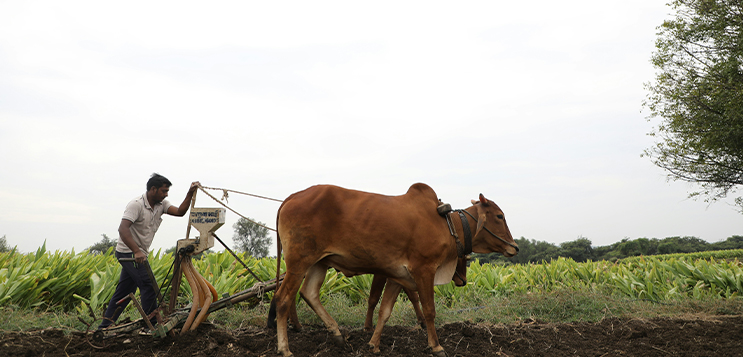
Tilling, which involves mechanically turning and loosening the soil before transplanting tobacco seedlings, breaks compacted layers and controls weeds. A finely prepared soil allows seedlings to establish quickly and uniformly.
During mulching, farmers cover the soil surface to conserve moisture and regulate temperature, often using plastic films that protect seedlings from early-season drought. Farmers believe this improves leaf characteristics that influence tobacco grading.
For farmers already navigating uncertain weather patterns and fluctuating markets, abandoning these methods without reliable alternatives can feel like gambling with their livelihoods.
Why Tobacco Companies Want Farmers to Rethink These Practices
Tobacco companies, however, increasingly see these practices differently.
Over the past decade, global tobacco firms have come under growing pressure to demonstrate environmental responsibility. Sustainability commitments, ESG frameworks, and international agreements have increased scrutiny over how tobacco is cultivated. Europe, in particular, is pushing companies to ensure that the entire supply chain—from farm practices to export standards—meets evolving sustainability expectations under the European Green Deal.
Conventional tilling can accelerate soil erosion and increase surface runoff, particularly during heavy rainfall. Disrupting soil structure, breaking down aggregates, and reducing protective residue cover limit water infiltration and lead to faster runoff. This runoff often carries soil, pesticides, and other agrochemicals into nearby water bodies, contributing to pollution.
Under emerging European sustainability frameworks, particularly due diligence requirements such as the CSDDD, companies are increasingly expected to account for such environmental impacts across their supply chains. As a result, soil degradation and associated water pollution are no longer localised concerns but potential compliance risks in export markets.
Plastic mulching presents another challenge. Polyethylene mulch films degrade slowly and fragment in the soil, contributing to microplastic contamination. The issue, however, goes beyond environmental concerns. These films deteriorate under sunlight and mechanical stress, and if fragments remain in the field, they can mix with harvested leaves, creating quality risks for manufacturers. Mulched plants may grow larger but often exhibit lower filling power, meaning more tobacco is required to produce a cigarette. This increases manufacturing costs and can also affect combustion quality.
For companies relying on standardised leaf inputs, these variations complicate production.
Is There a Replacement for Tilling and Mulching?
Farmers are not wrong in relying on tilling and mulching to manage cultivation risks. However, when used excessively, as is often the case, these practices can have long-term impacts on land and water systems.
Over time, intensive tillage can lead to:
• breakdown of soil structure impacting soil health
• reduced water infiltration
• higher nutrient runoff
• increased vulnerability to drought
As soil health declines, farmers may be forced to rely on higher chemical inputs to maintain crop yield and quality.
Beyond contamination risks, plastic mulching also affects soil biology. As films degrade, fragments accumulate in the soil, disrupting root development and microbial activity. While these impacts may take time to become visible, they raise concerns about the long-term sustainability of current practices.
The challenge, therefore, is not choosing between farmers and companies but aligning short-term productivity with long-term soil sustainability.
One promising pathway is conservation agriculture, built on three principles:
• minimal soil disturbance
• continuous soil cover
• diversified crop rotations
Instead of ploughing entire fields, farmers can adopt strip-till or no-till systems, where only narrow planting rows are loosened while the rest of the soil remains undisturbed.
Cover crops such as rye or oats can be grown in the off-season and later converted into organic mulch, reducing evaporation and suppressing weeds. Where additional protection is required, biodegradable mulch films offer an alternative, breaking down naturally without contributing to microplastic accumulation.
Why the Transition to Sustainable Tobacco Farming Won’t Be Easy
Several tobacco-producing regions have already begun adopting these approaches. In the United States, conservation farming has reduced soil erosion while maintaining yields, while Brazil has introduced integrated systems using cover crops and reduced tillage.
For Indian farmers, however, the transition will not be simple. Conservation agriculture requires specialised equipment, new agronomic knowledge, and changes to long-established practices. Without financial and technical support, such shifts can be difficult for smallholder farmers.
This is where tobacco companies must play a more proactive role. If companies expect tobacco to be cultivated in ways that meet sustainability and quality standards, they must also help farmers adopt these practices through training programmes, demonstration farms, and introducing improved agricultural technologies.
Because ultimately, the sustainability of the tobacco supply chain depends on the sustainability of the farm.
