
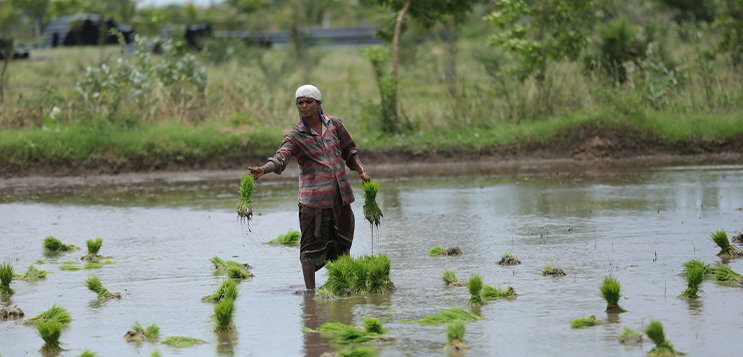
As European regulations become more stringent, exporters will increasingly be asked to show how a crop was grown, who worked on it, whether workers were paid fairly, whether children were kept out of hazardous labour, and whether basic safety protections existed on the farm. For Indian agriculture, still built around small farms, seasonal labour, informal hiring, and fragmented supply chains, this demands a fundamental shift in farm-level practices.
How EUDR and CSDDD bring labour into export compliance
Labour rights enter the European sustainability framework most clearly through the EU Deforestation Regulation and the Corporate Sustainability Due Diligence Directive. The EUDR requires covered commodities to be deforestation-free and legally produced. The word “legal” is crucial because it requires compliance. That involves the producer country’s laws, including labour protections, minimum wage rules, and safeguards against child labour.
The CSDDD goes further by requiring large companies to identify, prevent, and address human rights and environmental harms across their supply chains. Together, these rules push buyers, exporters, and processors to look beyond the factory gate and into the farm. A coffee shipment may be questioned if labour records are missing. A tobacco supply chain may face scrutiny over child labour, unsafe leaf handling or lack of protective equipment. A tea estate may need to show that women workers have safe grievance channels.
Where Indian agriculture is vulnerable
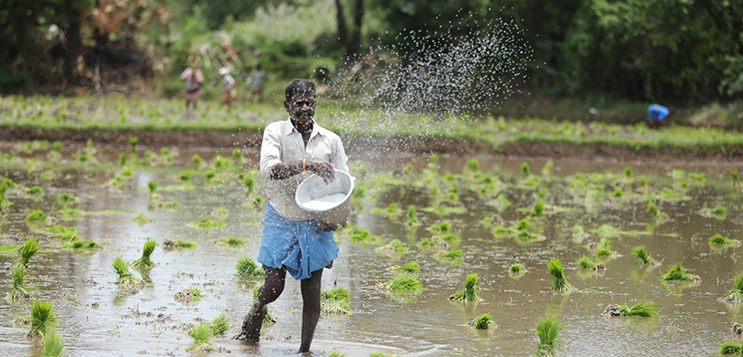
India’s vulnerability lies in the everyday informality of agricultural labour. On paper, India has laws on minimum wages, child labour, occupational safety, and bonded labour, but there are gaps in its implementation. But more importantly, these protections become difficult to track on the farm because work is seasonal. Additionally, Indian agriculture is family-based, migrant-dependent, and often routed through contractors or local intermediaries.
In tobacco cultivation, the biggest concerns are child labour, debt-driven family labour, and unsafe working conditions. Farming families under financial stress may depend on unpaid child labour during planting, weeding, harvesting, and leaf handling. Workers also face exposure to pesticides and Green Tobacco Sickness, a form of nicotine poisoning caused by handling wet tobacco leaves without protective gear. More often than not, gloves, masks, safety training, and health records are absent on Indian farms, posing a compliance risk.
On coffee plantations, especially in Karnataka, Kerala, and Tamil Nadu, seasonal migrant workers are often paid through piece-rate systems that can push earnings below the minimum wage during low-yield seasons. Wage advances can create debt dependence. Inadequate sanitation, lack of clean drinking water, and poor living conditions also weaken the sector’s claim to responsible sourcing.
In tea estates, women make up a large part of the workforce. Yet many estates still struggle with gender discrimination, unsafe working conditions, and weak grievance mechanisms. If women workers cannot safely report harassment, wage disputes or safety failures, the supply chain cannot credibly claim that its labour standards are being monitored.
The common thread across these sectors is that violations are rarely documented in a form that export markets can verify. Wage slips, worker registers, PPE records, grievance logs, and contractor accountability remain uneven. Under the new European compliance regime, the absence of proof can become as damaging as the violation itself.
The export risk for Indian producers
In all this, the scale of exposure is significant. The EU is a major market for Indian exports, and the EUDR alone could affect hundreds of tariff lines. Along with legal compliance, it requires plot-level traceability, which is a serious challenge for commodities sourced from thousands of small farmers.
The burden will fall hardest on smaller producers and exporters. Large companies may absorb the cost of audits, data systems, and segregation, but smaller firms may struggle. If compliance becomes too expensive or complex, buyers may shift to countries that can provide cleaner data and faster documentation.
Vietnam’s coffee sector, for instance, is already moving towards systemic EUDR readiness. Brazil and other large producers are also building national traceability capacities.
What India needs to do to meet labour rights laws
India has begun responding, but the effort needs to widen. The Coffee Board’s India Coffee App, which allows growers to register and map plantations, is a step in the right direction. Similar digital systems will be needed across other export-facing commodities. But technology alone will not solve the issue. Traceability must be matched with wage records, worker registers, safety practices, grievance systems and credible verification.
This is where India’s policy response must become more integrated. Existing schemes such as PM-KISAN, the Agriculture Infrastructure Fund, Soil Health Cards, PMFBY, PKVY, and e-NAM can support this transition. But they need to be linked more clearly to export compliance. Farmer income support can reduce distress-driven labour practices. Infrastructure funding can help build storage and segregation systems. Organic and regenerative farming schemes can support lower chemical use. Digital markets can improve price transparency.
At the same time, India’s diplomatic concerns are valid. Developing countries cannot be expected to absorb the full cost of standards designed in wealthy markets. If Europe wants cleaner and fairer supply chains, transition finance, technical support, and realistic timelines must be part of the bargain. Compliance should not become an unfunded mandate passed down to small farmers and workers.
The way forward is therefore twofold. India must continue challenging unfair trade burdens at global forums, while preparing its own farm systems for the reality of stricter markets. Labour documentation, digital traceability, and safer farming practices can no longer be treated as peripheral issues. They are becoming central to export competitiveness.
For Indian agriculture, the next trade barrier may not look like a tariff. It may look like a missing wage record, an unmapped farm, an undocumented worker, or the absence of a grievance mechanism. In the new global market, sustainability will be judged by what can be proven. India’s export future will depend on how quickly its agricultural systems learn to show that the crop is clean, legal, and fair from the field itself.
