
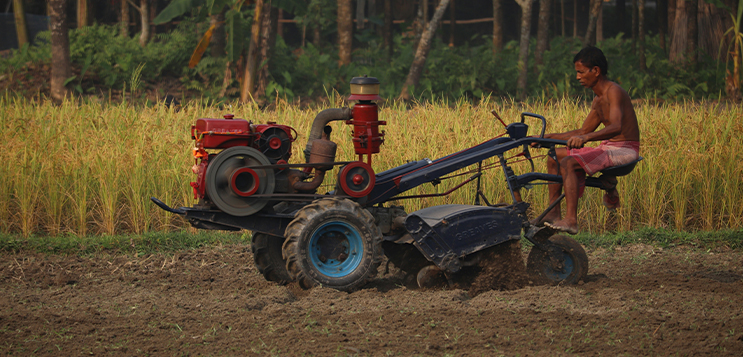
Agronomy in India is undergoing a massive shift. For decades, the focus was entirely on producing a high volume of crops. Today, the priority has shifted toward using resources efficiently, surviving extreme weather, and meeting global sustainability rules like ESG and international export standards. With over 80% of Indian farmers operating small or marginal plots of land, the best farming practices are those that lower input costs, restore soil health, and protect crops from unpredictable monsoons.
Here is a look at the core agronomic frameworks transforming Indian agriculture today.
1. Conservation Agriculture and Soil Protection for Modern Agronomy
Traditional heavy plowing destroys the soil’s natural structure and quickly uses up organic matter. Modern conservation farming relies on three core ideas: disturbing the soil as little as possible, keeping the soil covered, and rotating crops.
- Zero-Tillage / Minimum Tillage: Planting seeds directly into old crop stubble without plowing first. This saves tractor fuel, keeps moisture in the ground, and lowers carbon emissions. For example, using a Happy Seeder or Smart Seeder in northern India lets wheat be sown directly into paddy fields, eliminating the need for toxic stubble burning.
- Green Maturing: Growing specific cover crops like Dhaincha (Sesbania) or Sunhemp during empty field seasons and plowing them back into the dirt. This naturally adds 60 to 80 kg of atmospheric nitrogen per hectare and greatly boosts organic carbon.
- Laser Land Leveling: Using laser-guided scrapers to flatten fields perfectly. This ensures water spreads evenly, cutting total water use by 20 to 30% and helping crops grow uniformly.
2. Precision Water Management for Modern Agronomy
Farming consumes nearly 80% of India’s available freshwater. Over-pumping is quickly drying out groundwater levels in states like Punjab, Haryana, and Tamil Nadu. Moving away from flood irrigation is now critical.
- Micro-Irrigation (Drip and Sprinkler Systems): Instead of flooding entire fields, drip tubes deliver water straight to the roots of each plant. This simple shift boosts water efficiency up to 90% and keeps the spaces between rows dry, stopping weeds from growing, and consequently yield increase in many crops.
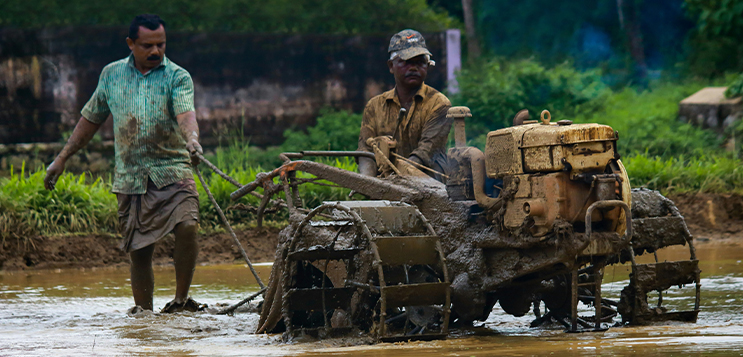
- Direct Seeded Rice (DSR): Rice is normally grown by flooding nurseries and transplanting seedlings by hand into mud. DSR lets rice seeds be sown directly into the main field using mechanical seed drills. This cuts down on expensive labour and slashes water use by 15 to 25%. Recently, India approved new direct-seeded rice varieties developed by ICAR and IRRI that aim to cut water use, reduce labor, and strengthen climate resilience.
- Alternate Wetting and Drying (AWD): For flooded rice fields, farmers use a simple plastic pipe pushed into the dirt to check underground water levels. They only irrigate when the water drops below 15 cm from the surface, cutting water usage and greenhouse methane emissions without lowering crop yields.
3. Climate-Resilient Cropping Systems for Modern Agronomy in India
Unpredictable monsoons have made growing just one crop very risky. Changing crop patterns provides a safety net against bad weather and matches international market demands.
- Crop Diversification and Intercropping: Shifting high-risk, thirsty fields toward oilseeds, pulses, and maize helps the soil fix its own nitrogen. Growing two crops together (like sugarcane with chickpea) gives farmers two income sources from the same space.Research also indicates improvement in yield from crop rotation and intercropping.
- The Millet Renaissance: Growing climate-resilient crops like Pearl Millet (Bajra), Finger Millet (Ragi), and Sorghum (Jowar). These crops use less than half the water of rice or sugarcane, grow well in poor soil, and easily survive extreme heat.
- Agroforestry Infrastructure: Planting high-value or nitrogen-fixing trees along farm borders. These trees act as physical windbreaks, protect the microclimate, and give farmers long-term timber or animal feed security.
4. Balanced Nutrient and Pest Control
Overusing chemical fertilisers like urea has ruined India’s natural soil nutrient balance, making the soil dangerously acidic. Restoring biological harmony is necessary for healthy, sustainable yields.
| Farming Practice | Core Mechanism | Real-World Field Impact |
| Soil Health Card | Targeted macro and micro-nutrient applications based on lab tests. | Stops over-fertilisation; lowers input costs by 10 to 15%. |
| Fertigation | Dissolving water-soluble fertilisers directly inside drip lines. | Improves nutrient uptake by 30% and stops chemical runoff. |
| Bio-fertilisers | Treating seeds with natural bacteria like Azotobacter or Rhizobium. | Naturally unlocks trapped soil nutrients; lowers chemical reliance. |
| Biological Pest Control | Deploying pheromone traps, sticky cards, and organic Neem oil. | Targets specific harmful pests without hurting good insects. |
5. Digital Tools and Smart Mechanization for Modern Agronomy
Modern technology allows small farmers to group their resources together and access data that used to be limited to massive commercial farms.
- Custom Hiring Centers (CHCs): Since small farmers cannot afford expensive harvesters or drones, CHCs work like a rental marketplace. This allows them to rent advanced machinery at low costs for their small plots.
- Kisan Drones for Crop Care: Using drones to spray precise, low-volume liquid nutrients and organic pest controls. This uses less than 10% of the water needed for manual spraying and keeps workers safe from farm chemicals.
- IoT Soil Sensors: Affordable, solar-powered soil probes placed in farm clusters provide live data on soil moisture and temperature. This sends simple mobile text alerts telling farmers exactly when to turn on the water.
The Road Ahead for Modern Agronomy in Indian Agriculture
The shift toward modern agronomy is one of the most important steps for protecting India’s agriculture from a changing climate.
By scaling up smart tools like precision water management and digital mechanisation, smallholder farmers are turning resource-saving ideas into higher daily incomes. As global export rules tighten and water scarcity grows, adopting these efficient farming methods isn’t just a choice—it is a required step to keep India’s entire food supply chain running securely.
