
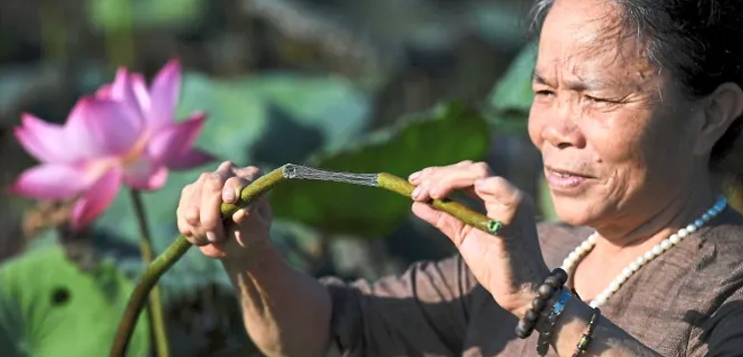
It is the early 1900s in Kyaing Khan village in Myanmar’s Shan region. A 50-year-old weaver, Daw Sa Oo, is said to have noticed the fine filaments hidden inside a lotus stem while preparing flowers as an offering at a nearby Buddhist temple. Curious, she drew the strands out, rolled them together, and wove them into cloth. The finished fabric was donated to the local abbot. What began as an act of devotion slowly evolved into a weaving tradition, particularly during the Tazaungdaing festival, where robe-weaving became a feature of religious life.
A century later, that same filament has travelled from monastic robes to global luxury markets. Lotus stem silk is now counted among the rarest textiles in the world. In India, particularly in Manipur, it has found expression in sarees that are not only artisanal but also positioned as among the most sustainably produced textiles available today.
This evolution comes at a time when the global textile industry is under pressure. Sustainability is no longer a peripheral conversation; it is increasingly becoming a market requirement. Synthetic fibres face scrutiny for microplastic pollution. Conventional silk raises ethical and energy concerns linked to sericulture. In this landscape, lotus stem silk offers a markedly different production logic.
Lotus Silk is a fibre born from wetlands, not factories
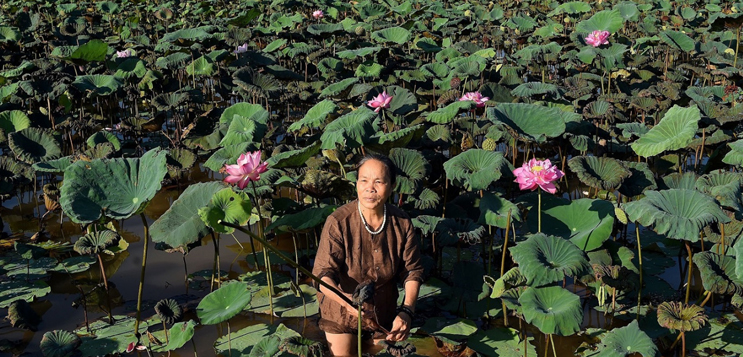
The journey of lotus silk begins in shallow lakes and slow-moving freshwater bodies where Nelumbo nucifera grows naturally in nutrient-rich sediment. The plant does not require irrigation infrastructure, synthetic fertilisers, or pesticide regimes. Unlike cotton, which is water-intensive and chemically dependent in many geographies, lotus thrives within existing aquatic ecosystems.
From Myanmar’s Inle Lake, the craft expanded to Cambodia and Vietnam, and more recently to India. In 2019, Bijiyashanti Tongbram pioneered lotus fibre extraction in Loktak Lake in Manipur, establishing India as a significant producer in this niche segment. The transition from sacred textile to structured livelihood has been gradual, but deliberate.
What makes the production of lotus silk thoroughly sustainable
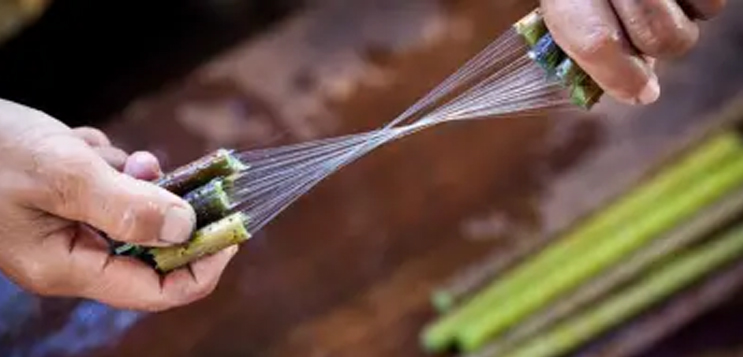
The weaving process itself explains much of the lotus silk’s sustainability profile. Stems are harvested during the rainy season and must be processed within 24 hours. If they dry out, the internal filaments become brittle. Artisans split the stems manually and draw out 20 to 30 delicate strands at a time, rolling them together on a damp surface to form yarn. There is no mechanised reeling, no boilers, no degumming, and no synthetic additives. Electricity use is negligible.
Estimates suggest that lotus silk production emits less than 1 kg of CO₂ per kilogram of fabric. By comparison, cotton, viscose, and polyester carry significantly higher emission intensities at 27 kg, 30kg, and 21kg per kilogram of fabric, respectively. While comprehensive lifecycle assessments remain limited, the structural characteristics tell you that the lotus silk has low energy input, minimal chemical intervention, and biodegradability.
About the fibre, it is cellulose-based, like cotton, rather than protein-based like mulberry silk. So, wherein traditional sericulture requires boiling cocoons to remove sericin, this energy-intensive stage is absent in lotus processing. Moreover, even the dyeing in lotus silk production is typically undertaken using plant-based dyes derived from bark, flowers, and natural extracts, ensuring wastewater remains non-toxic and biodegradable. The absence of animal rearing further distinguishes it from conventional silk systems.
Read more on sustainable fabric: Eri Silk: Weaving a Peaceful Future for Ethical Fashion
But the environmental story of this silk extends beyond the fibre extraction.
Since Lotus is a perennial plant, harvesting stems does not destroy the root system; instead allows regrowth within the same ecosystem. In lakes such as Loktak, excessive aquatic vegetation can restrict sunlight penetration and reduce dissolved oxygen levels. So, managed harvesting of lotus stems can assist in controlling biomass and improving water circulation as well. Which is why, if integrated thoughtfully, lotus silk production aligns ecological management with income generation.
For regions facing wetland degradation and declining traditional livelihoods in India, this linkage between ecosystem health and enterprise creates a differentiated sustainability model.
Why does lotus silk cost so much? The economics of scarcity
Lotus silk’s environmental efficiency is matched by its production constraints. Every stage is manual and highly time sensitive. An artisan can process only 200 to 250 stems a day. Nearly 30,000 stems are required to produce one kilogram of fibre, and close to 100,000 stems for a single saree. Each metre may demand up to 40 hours of skilled work.
The pricing, therefore, reflects structural realities rather than luxury positioning alone. In Manipur, pure lotus silk sarees retail upwards of ₹32,000 and can exceed ₹50,000 depending on intricacy. High-quality mulberry silk sarees, by comparison, typically cost between ₹10,000 and ₹20,000. The premium attached to lotus silk is a direct function of labour intensity, seasonal harvesting cycles, and raw material scarcity.
Market positioning and scope for lotus silk in India and beyond
This production structure clarifies the market pathway. Lotus silk is not positioned as a replacement for conventional silk. Its reliance on wetlands, manual extraction, and limited harvesting windows makes large-scale substitution impractical. Yet this very constraint may define its long-term relevance, particularly as a base fibre for blended fabrics that combine sustainability with greater scalability.
Luxury brands have already begun experimenting with lotus blends, signalling acceptance at the ultra-premium end of the market. Blending lotus fibre with organic cotton or mulberry silk presents a viable route to moderate price points while retaining a measurable sustainability component.
Demand for ethical and climate-conscious textiles is expected to grow steadily over the coming decade. Within this transition, lotus silk occupies a distinct space: low-volume, high-value, and narrative-driven.
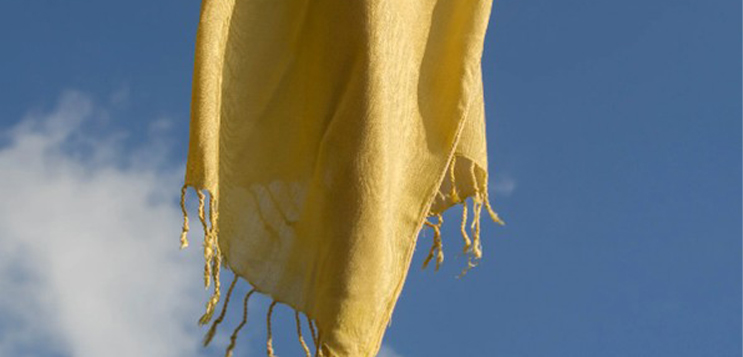
For India, the opportunity lies in structured value addition rather than scale expansion. Skill development, quality certification, design innovation, and wetland conservation frameworks can collectively strengthen Manipur’s positioning as a global lotus silk hub. Beyond sarees, there is also scope for product diversification into lightweight garments, stoles, wellness wear, and blended apparel segments, particularly given the fabric’s breathable and moisture-regulating properties. As Myanmar has successfully integrated lotus weaving workshops into its tourism narrative, a similar approach could create an additional revenue layer for Indian producers. However, without coordinated institutional support, the market will remain constrained by seasonality and skilled labour availability.
In a textile market driven by speed and volume, lotus silk represents calibrated production. It demonstrates that high-value exports need not be resource-intensive. When luxury is anchored in ecology, craft, and innovation, it can generate livelihoods without depleting the ecosystems that sustain it.
And much like the lotus itself, the fibre rises from the water — intact, deliberate, and without visible residue.
