
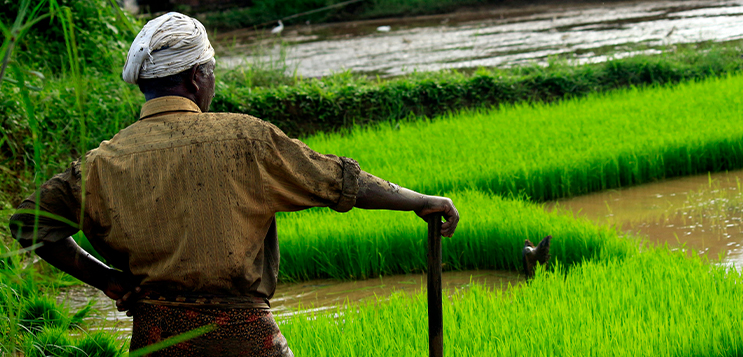
A farmer in Haryana follows all the agricultural practices, plants the right variety of seeds, sprays what the local dealer recommends, and harvests his produce on time. The rice clears a domestic lab, yet the European port flags it for exceeding a pesticide limit. But, why does the same grain pass in India but fails in Europe? Why is it that two regulators see the same grain so differently?
Let’s take a deeper look at what is causing this difference of opinion.
The great MRL divide
The Minimum Residue Limit (MRL) is the highest level of pesticide residue legally permitted in food. It is not a measure of toxicity; rather, it is a safety threshold based on dietary exposure, toxicology data, and acceptable daily intake.
However, MRLs are not universal. The European Union (EU), the Codex Alimentarius Commission, and the Food Safety and Standards Authority of India (FSSAI) each maintain their own databases. These differ because of distinct diets, climatic conditions, and precautionary philosophies.
For instance, the EU applies a default MRL of 0.01 mg/kg whenever no specific limit exists. Therefore, it essentially follows a “near-zero” tolerance. India, on the other hand, may allow higher levels depending on local residue trials and crop protection needs.
Different standards for the same crop
The mismatch becomes evident in widely traded crops such as basmati rice and spices.
In 2017, the EU drastically reduced the MRL for tricyclazole, a fungicide critical for managing rice blast, to 0.01 mg/kg. India’s domestic guidelines historically allowed higher levels, closer to 3 mg/kg, based on tropical pest pressure and field data. The Codex Committee on Pesticide Residues (CCPR) has since discussed a 5 mg/kg tolerance for rice, but that proposal is still under review and not formally adopted.
Similarly, chlorpyrifos, once a common insecticide for fruits and vegetables, has been completely banned in the EU since 2020 with a default MRL of 0.01 mg/kg, while India is still phasing out its use.
Ethylene oxide, used for sterilising spices, remains another flashpoint. The EU applies a combined limit of 0.1 mg/kg for ethylene oxide and its metabolite 2-chloroethanol, whereas India is still developing a unified approach for post-sterilisation residues.
The numbers may appear tiny but they define billion dollar markets. A single decimal point can decide whether an export is accepted or rejected.
Multiple trade fallouts in the past have raised concerns
In 2023 alone, the EU’s Rapid Alert System for Food and Feed (RASFF) flagged over 50 consignments of Indian agricultural products for pesticide residues. Most of these were herbs, spices, and cereals. Each rejection means financial loss, reputation damage, and stricter scrutiny for future shipments.
For exporters, compliance now means EU-accredited testing, traceable sourcing, and pesticide-specific monitoring. Adhering to compliance automatically means a rise in expenditure, and these can be easily absorbed by the larger companies. But what about the small farmers? Who thinks about them?
Is it fair to expect a small farmer with a two-acre plot in Punjab or Kerala to know the latest changes to MRL levels as Europe projects its race towards sustainability on the global South?
Why does the MRL divide between Europe & India exist?
The MRL mismatch stems from both science and policy. India’s FSSAI and Central Insecticides Board (CIBRC) rely on residue trials reflecting Indian diets and field conditions. The EU, through the European Food Safety Authority (EFSA), frequently updates MRLs using the “precautionary principle,” often lowering limits even before toxicology data is conclusive.
This precautionary approach aligns with the EU Green Deal and Farm to Fork Strategy, which target a 50% reduction in pesticide use by 2030. While laudable from an environmental standpoint, these measures create non-tariff trade barriers for countries like India that depend on chemical pest control in tropical climates.
India is plagued by its pesticides
Indian agriculture faces a paradox: overall pesticide use is low by global standards (around 0.27 kg/ha), yet residue violations remain frequent in certain export chains. Off-label applications, unverified pesticide formulations, weak dealer regulation, and poor farmer training all contribute. Moreover, the gap between research stations and real farms remains wide. Farmers often rely on unverified advice or mix multiple chemicals without understanding persistence or pre-harvest intervals.
Add to this the limited number of NABL-accredited residue testing labs, the high cost of analysis (₹3,000–₹6,000 per sample), and you have a system that punishes the smallest players the most.
Balancing a fine line between trade and safety
The EU reports that over 98% of its food samples remain within MRLs each year, reaffirming consumer confidence. India, meanwhile, is fighting to prove that its science is sound and its produce safe. But should a developing country be penalised for climatic realities that demand more pest control? On the other hand, does it not sound more justified to have global trade evolve in a manner that accepts scientifically proven equivalence across regions?
Ultimately, achieving progress in food safety, fair trade, scientific research, and sustainable agriculture requires a collaborative approach. One that balances global standards with local realities, ensuring equitable opportunities for everyone involved in the industry.
