
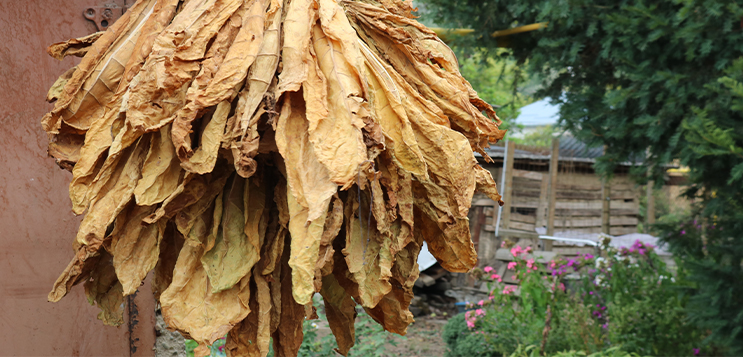
Recognising the importance and urgency of preparing India’s FCV tobacco sector for the European Green Deal (EGD), Team Sustainable Alternatives conducted a series of sensitisation workshops delivered across the state’s major tobacco-growing regions. The workshops explained the implications of the EGD, shared lessons from earlier studies, and initiated discussions on how the FCV tobacco ecosystem might adapt.
Northern Light Soil Areas
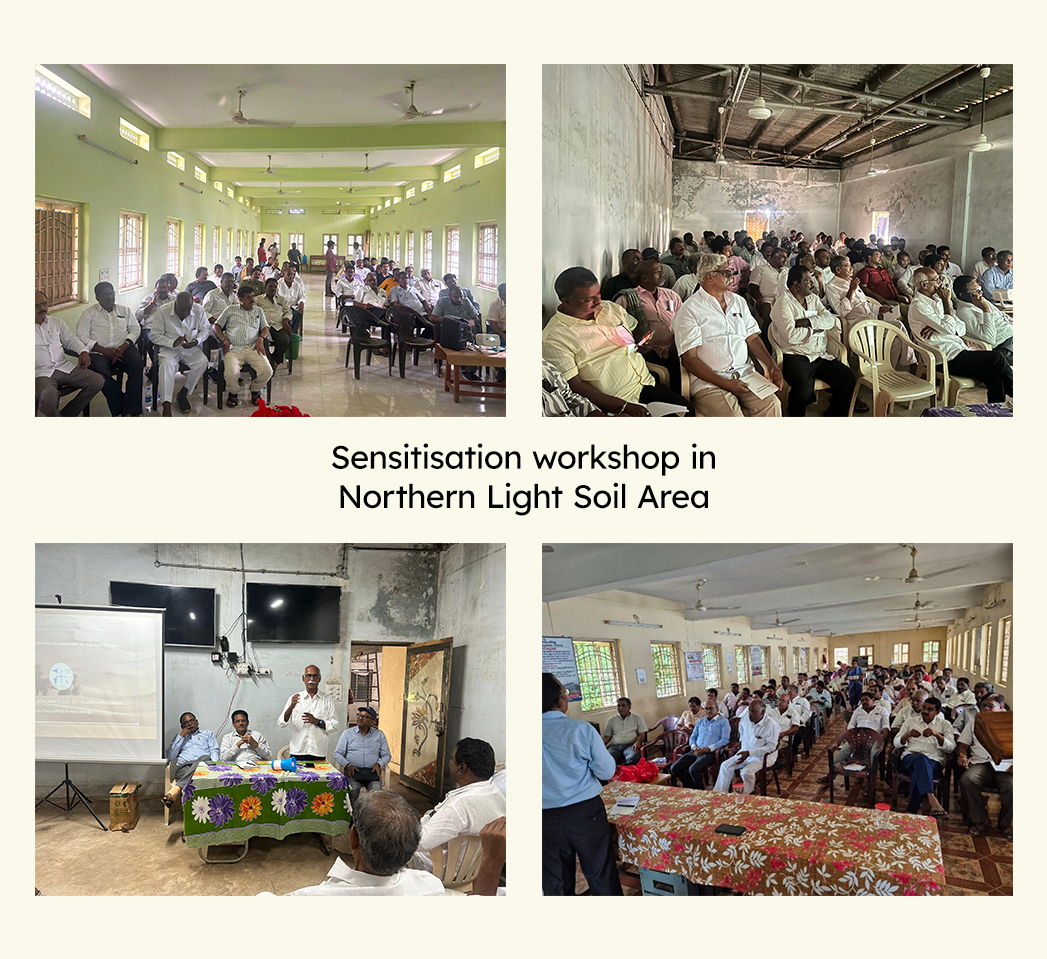
In the Northern Light Soil region, covering Jangareddygudem 1 & 2, Koyyalagudem, Gopalapuram, and Devarapalli, over 140 farmers attended the sensitisation workshops. The Region Manager (NLS) – Tobacco Board, Auction Superintendents, and Presidents of respective Tobacco Growers Associations attended the workshop. From Sustainable Alternatives, Dr C. Chandra Shekhar Rao, scientist (Retd.), ICAR-CTRI; Mr M. Pardha Saradhi; and Mr Kalyan Ranjan were the representatives who moved the conversation forward.
Southern Light & Black Soil Areas
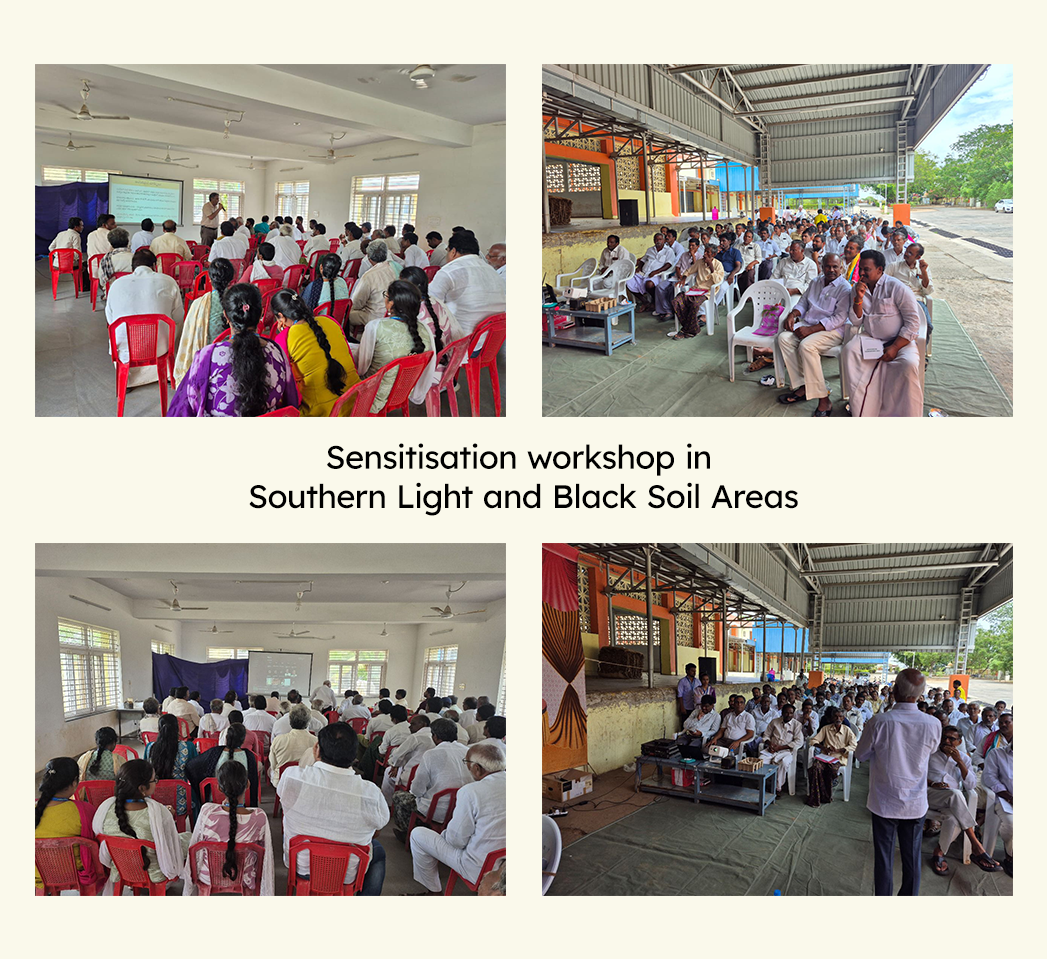
In the Southern Light and Black Soil areas, covering Kandukuru 1 & 2, D.C. Palli, Kaligiri, Vellampalli, and Tanguturu, over 307 farmers participated in the sensitisation workshops. The Region Manager (SLS & SBS) – Tobacco Board, Auction Superintendents, and Presidents of respective Tobacco Growers Associations also attended the workshop. For Sustainable Alternatives, Mr Uma Maheshwar Rao, Region Manager (Retd.), Tobacco Board, Mr M. Pardha Saradhi, and Mr Kalyan Ranjan were present to highlight the issues at hand.
In total, more than 440 farmers participated across both Northern Light Soil (NLS) and Southern Light & Black Soil (SLS & SBS) regions. Going forward, Sustainable Alternatives will cover the remaining five auction platforms in the SLS and SBS areas and conduct another round of EGD Sensitisation workshops in the NLS Area.
During the discussions, the local farmers raised concerns regarding the European Green Deal and its regulations. Here are some of them:
The Labour Shortages Which Intensify Pressures
Farmers repeatedly cited an acute labour shortage during the planting and harvesting seasons. They warned that EGD-linked compliance requirements would only increase labour demand and raise costs. Many also raised concerns about labourers who accept advances but fail to report them, leaving growers financially exposed. Questions were raised about the continued practice of on-farm grading of tobacco, described as labour-intensive and outdated compared to global peers.
Will Practical Alternatives for Fertilisers and Pesticides be Suitable for Farmers?
The farmers admitted to applying inputs beyond CTRI recommendations, arguing that prescribed levels do not ensure adequate yields. Calls to reduce chemical use under EGD were therefore met with scepticism. The lack of affordable, effective bio-pesticides was highlighted as a serious constraint. Farmers stressed that meaningful reductions in chemical inputs are only possible if farmyard manure and compost are made available in sufficient quantities.
Farmers Are Concerned About the Soil Practices
The farmers expressed strong belief in repeated tillage and mulching, which they said help retain soil moisture, generate stronger roots, and protect against pests. However, they also noted conflicting advice from industry representatives who caution against mulching, claiming it reduces nicotine levels, a key quality parameter. This divergence has created uncertainty among farmers about which practices align with both sustainability and market expectations.
Farmers Are Worried About Traceability and Compliance
Traceability was another central theme of concern. Farmers questioned why it is being emphasised as a new point, since bale identification numbers already provide accountability. They acknowledged that current systems allow tracking up to factory-level threshing but asked what changes would be required for end-to-end traceability, and at what cost. Farmers sought clarity on the technical support and handholding that would be available to them at different stages of the crop cycle.
The Farmers Ask: Will Compliance Be Enough?
Across both regions, a common worry remained unresolved: financial returns. Farmers pointed out that even those adhering to Good Agricultural Practices (GAP) do not consistently secure higher prices than peers who use chemical-intensive methods. Against this backdrop, investing further in EGD compliance without guaranteed premiums appeared unconvincing. “Why should we incur higher costs if there is no assurance of better prices?” was a recurring question across the platforms.
Preparing the Ground for the European Green Deal
The sensitisation workshops underscored both the readiness and the reservations of Andhra Pradesh’s FCV farmers. While there is a willingness to adapt, this remains conditional on clarity, credible alternatives, and assurance of fair returns. Farmers are aware of the global changes underway but remain cautious amid ambiguous requirements and rising costs.
Sustainable Alternatives has taken the first step by bridging the knowledge gap, beginning with institutions and extending to the grassroots. The next challenge lies in translating awareness into action, ensuring that India’s smallholder farmers are supported as they navigate this transition.
